Gas Leak Repairs in Newmarket
Smelling gas indoors is never a wait-and-see job, and gas leak repair in Newmarket is work for a licensed gasfitter, full stop. We're available 24/7, and there's no extra charge for nights, weekends or public holidays. Ring (07) 3524 0766 and we'll talk you through the immediate steps, which are also set out on our Newmarket emergency page.
If we're late, $100 comes off your bill

- Licensed and InsuredEvery job done by a licensed plumber. QBCC No: 15024607
- Fixed Quote FirstFlat-rate pricing, agreed before any work starts
- Lifetime Labour WarrantyBacked by our Fix-It-or-It's-Free guarantee (T&Cs apply)
- $0 Call-Out FeesNo extra charge for nights, weekends or public holidays
Repairing a gas system and testing one are both gas work in Queensland, so neither is a home handyman job. Fuel gas in a closed space is highly flammable, and a room that fills with it displaces oxygen, bringing on nausea, dizziness and, at worst, asphyxiation. That is why the licensed gasfitter is the starting point, not the last resort.
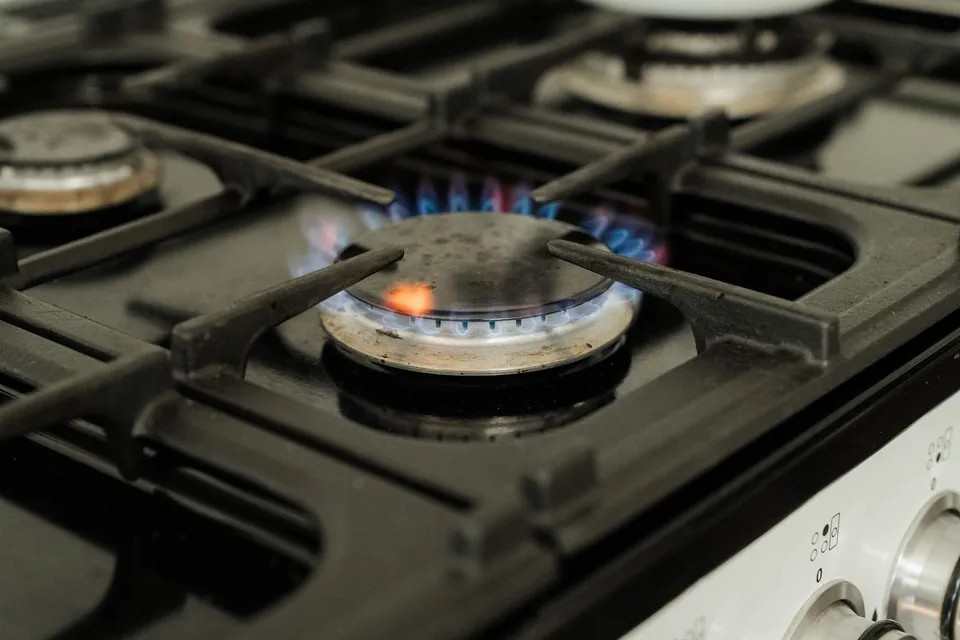
Testing a Gas System for Leaks
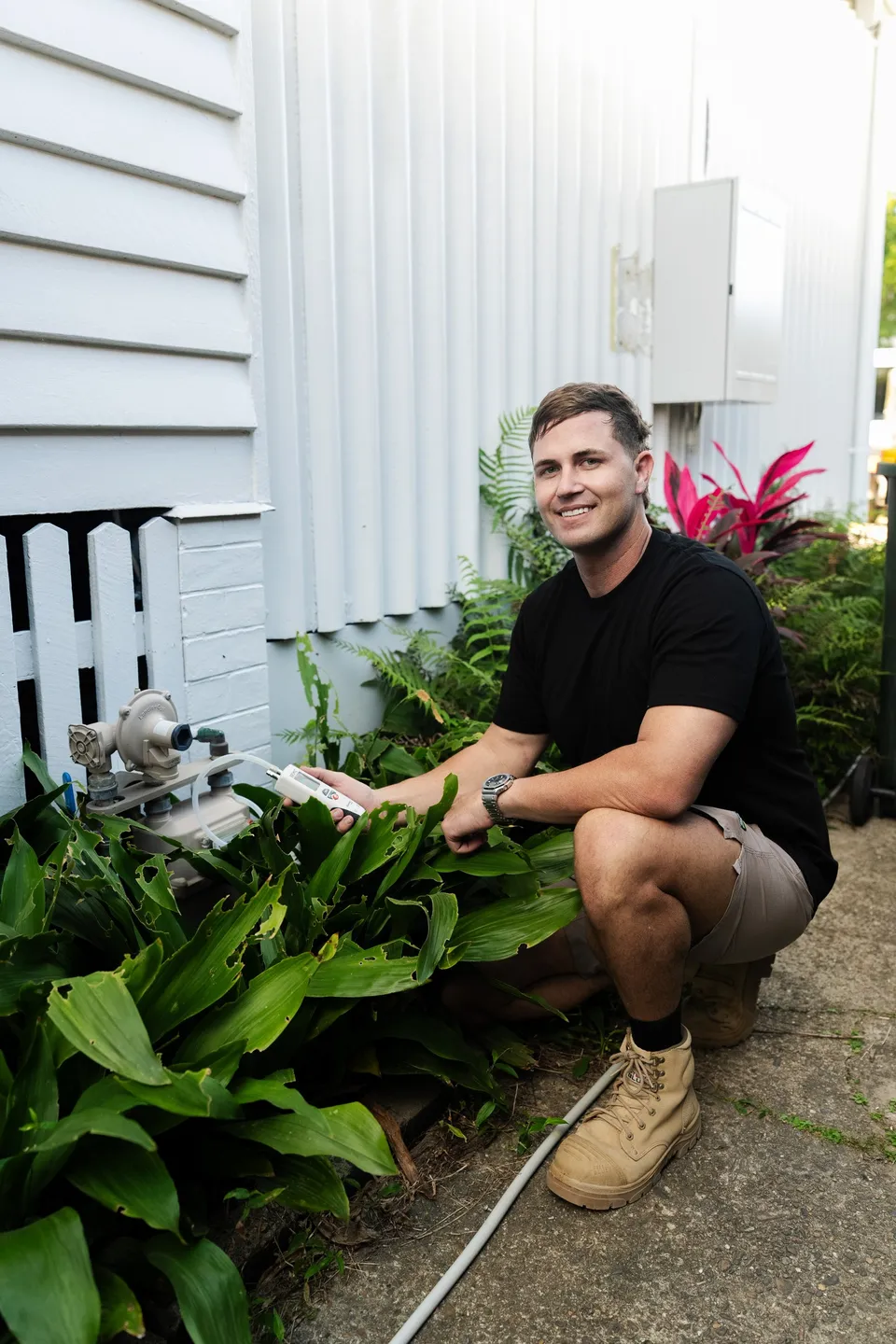
The gasfitter closes the supply, splits the run into stretches, pressure-tests each one to find the drop, then checks fittings with detergent until bubbles mark the leak. Each step narrows the search: first which stretch of pipe, then which fitting on it. The household version is simpler, and the Queensland Government describes it as a check, not a repair.
The household check, in one sentence. With the gas on, lightly spray a detergent-and-water mix over the supply connections, the regulator hose and the appliance's connection point. Bubbles appearing anywhere means a leak, so shut the supply, keep the system unused, rinse the suds off, then a licensed gasfitter is the next contact.
What the Gas Fitter Gives You Afterwards
Two papers can come out of the visit, each with its own trigger. A defect notice goes to the owner for any safety concern that isn't repaired on the day, and a compliance certificate is issued when the job installs or alters the gas system.
Defect notice
required whenever the gasfitter has a safety concern that remains open. Fix the problem on the spot and no notice is needed.
Imminent risk
the gasfitter makes the system safe first, then immediately phones the network operator and Queensland's gas safety regulator.
Compliance certificate
issued straight after an installation or alteration, certifying the work complies. A straight swap of one fitting may not count as an alteration.
Retest
whatever the repair, the system gets tested again before the gas goes back into service.
What each paper means for you as an owner is set out in more detail on our gas compliance certificates page.
Replace a Fitting, a Section or the Run
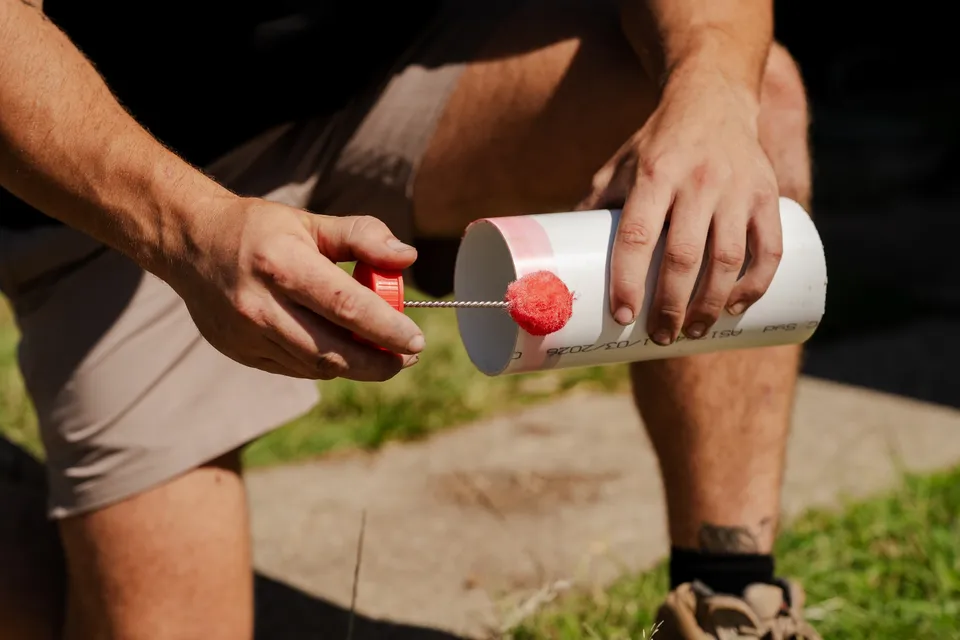
Repairs scale three ways: swap the fitting or a faulty regulator, renew an accessible stretch of pipe, or route a new line around an unreachable run, then retest. A licensed gasfitter handles all three, because both the repair and the testing are regulated gas work.
How the size of the fault sets the fix:
- A single part. A worn fitting or a failed regulator is the smallest repair, and often the whole job.
- An accessible stretch. Where a section of pipe in reach has corroded through, the gasfitter cuts it out and joins in new line.
- A buried or boxed-in run. When the faulty stretch sits behind a wall or under a floor, opening up the structure adds most of the labour, so new pipe routed around it often keeps the price down.
Every option ends the same way: the system is pressure-tested again, and the gas only returns once it holds.
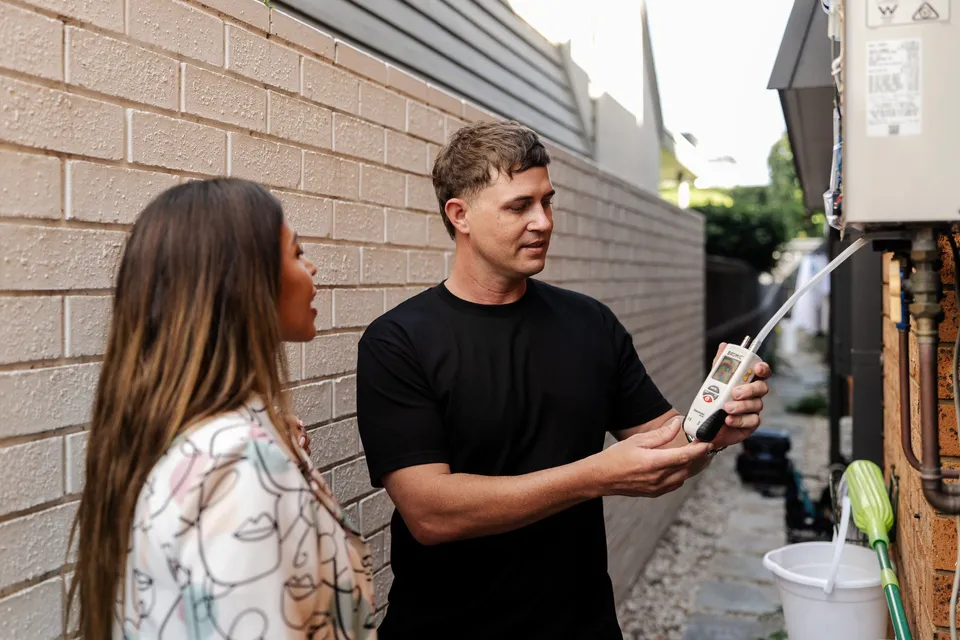
Fittings, Hoses and Joints That Let Gas Escape
From the supply inward, the common leak points are the meter or cylinder connections, the regulator assembly and its hose, the joints along the pipework, and the appliance connection at the end. Each part fails in its own way, and corrosion is the thread running through most of them.
Supply connections
Fittings here sit outside year-round, so weathering works on them constantly.
Regulator and hose
The hose flexes with every appliance move, and flexing plus age cracks rubber.
Threaded joints
A joint sealed decades ago can weep after enough heating and cooling cycles.
The appliance connection
The last join in the line takes the most handling, especially behind a cooker.
The gas itself behaves differently by type. A natural gas leak tends to rise and disperse outdoors because that fuel is buoyant. LPG is heavier, so it can collect in low ground and drains, which is why a gasfitter checks the low points of a property too.
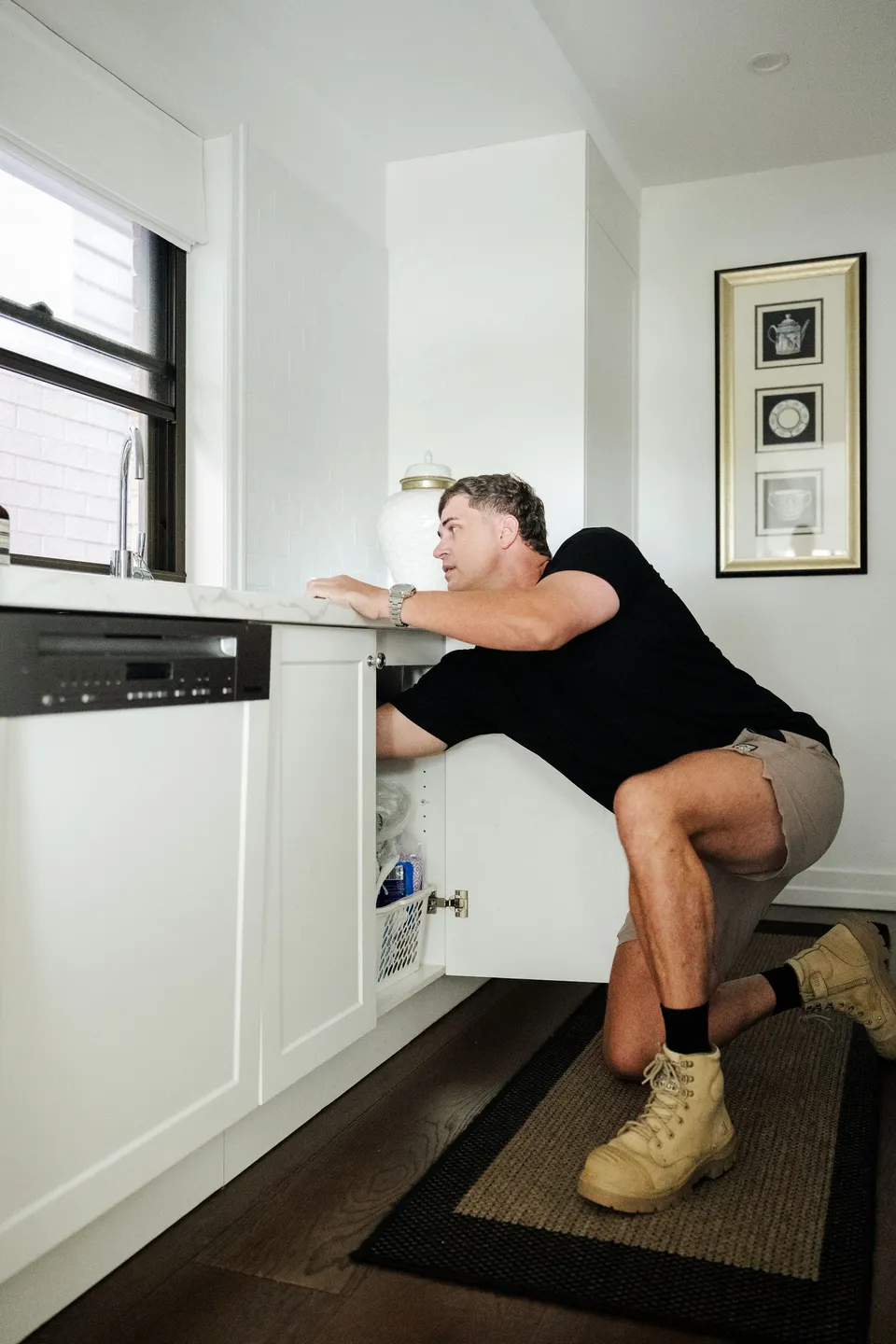
Gas Lines in a Suburb of Mixed Vintages
Housing here runs from pre-war weatherboards to recent infill, with area-level building approvals adding 123 dwellings over five years on top of that stock, and the gas pipework spans the same range of vintages. An old run inside a raised Queenslander behaves nothing like a short, straight line behind a new townhouse kitchen.
The townhouses and units packed in around the village centre are the tighter proposition. Gas appliances sit close together in shared-wall builds, so a weeping connection near a neighbouring lot's plaster becomes urgent fast. Our gas cooktop installation page covers the fit-out side of that work, and the broader gas fitting page lists everything we handle.
How a Gas Leak Repair Runs
- 1

Get in touch
Call (07) 3524 0766 or send a quick message about the job in Newmarket, and we'll ask what we need to know.
- 2

We find it and fix it
We close the supply, test the run stretch by stretch until the pressure drop gives us a location, then check every fitting in that stretch with detergent until the leak has one address. You see what we found before any repair begins.
- 3
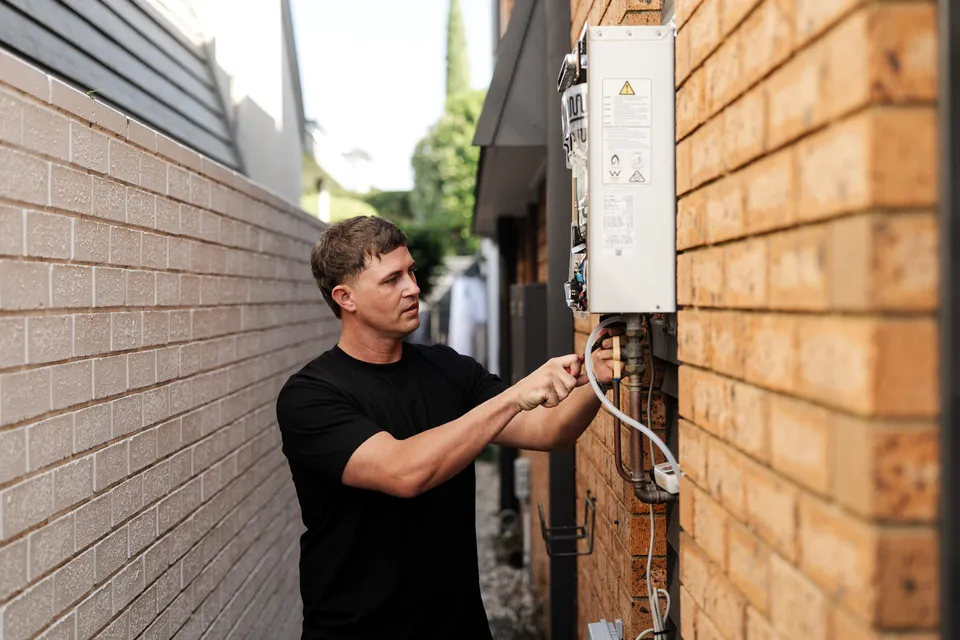
Sign off the quote
You'll see a fixed quote before any work starts, with flat-rate pricing and no hidden fees. The job starts when you're happy with it.
- 4

Pay once it's done
Pay by card or EFTPOS on site after the work's finished, or choose Fix now, pay later.
Plumbing job in Newmarket?
$0 call-out fees, available 24/7, and same-day where we can.
Gas Leak Questions From Newmarket Homes
Call (07) 3524 0766Who do I call about a gas leak in Newmarket?
Ring the gas supplier's emergency number, printed on your bill under emergencies, or a licensed gasfitter. If the smell is still there once the supply is off, call 000 straight away.
How do gas fitters actually find a gas leak?
The gasfitter separates the pipework into stretches and pressure-tests each one, and the stretch that drops holds the fault. Fittings in that stretch then get a detergent check, and bubbles pin down the exact spot.
Where do gas leaks usually start in a Newmarket house?
Most start at the supply end: the meter or bottle connections, the regulator assembly, the pipe joints, and the cooker or heater connection. Rust and wear on those parts cause most of them.
Does LPG leak differently from natural gas?
Yes. A natural gas leak drifts upward and disperses, while LPG sinks and can pool in low ground and drains, so a gasfitter hunts the low points of a property first.
What should I do about gas after a storm or flood?
Call 000 if you can smell gas at all. If the meter, regulator or cylinders look damaged, contact the gas supplier before anything gets used again.

Call Us About a Gas LeakWe'll call you back.
Book on (07) 3524 0766 for plumbing anywhere in Newmarket. We're available 24/7, there's no extra charge for nights, weekends or public holidays, and every job comes with $0 call-out fees.
To claim your $0 call-out fee, call (07) 3524 0766 today.